

EP 10·Nov 19, 2025·2906
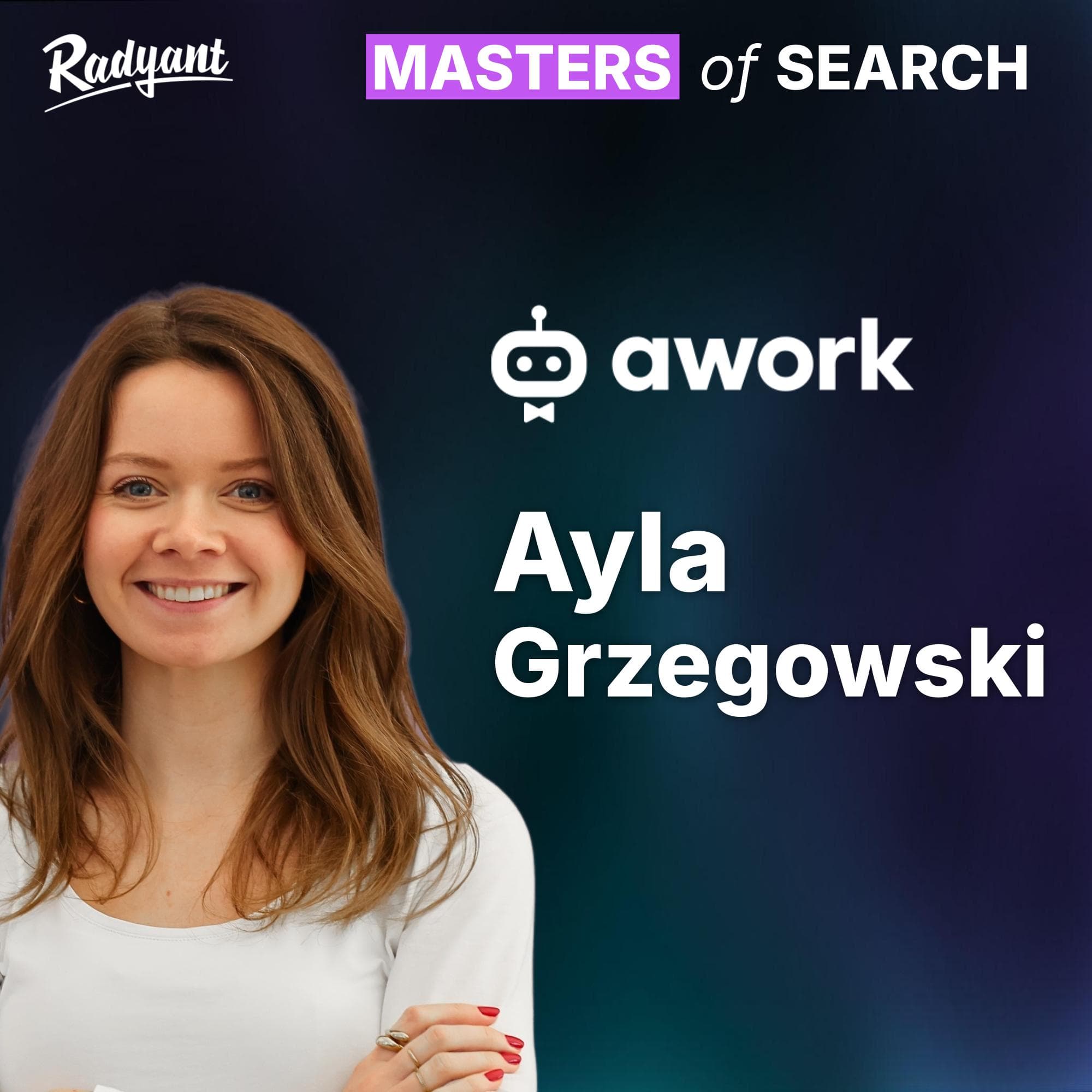
HOW TO WIN AGAINST 100X BUDGETS IN B2B SEO | Ayla Grzegowski, Team Lead Content & SEO @ awork | #10
Show notes
Ayla Grzegowski is Team Lead Content & SEO at awork, a Hamburg-based B2B SaaS startup that's making waves in the project management space.
What makes awork particularly interesting is their David vs. Goliath story. They're competing directly with international giants like Asana, Monday.com, and Trello. So far they're pretty successful with it and Content and SEO has played a big role in that success.
📌 Try awork for free: https://www.awork.com/
▶ Let's connect! 🔗 Niklas on LinkedIn: https://www.linkedin.com/in/niklas-buschner/ Radyant on LinkedIn: https://www.linkedin.com/company/radyant/ Ayla on LinkedIn: https://www.linkedin.com/in/ayla-grzegowski/ awork on LinkedIn: https://www.linkedin.com/company/awork-com/
Transcript
Full conversation
via podigee
- 00:00:00Welcome to a new episode of the Masters of Search Talks.
- 00:00:04I'm super happy to introduce today's guest, which is Ayla Ziegowski, who is team lead content and SEO at AWork, a Hamburg-based BWB SaaS startup that's making waves in the project management space.
- 00:00:18What makes AWork particularly interesting is their David versus Goliath story.
- 00:00:23They are competing directly with international giants like Asana, manday.com, Trello, et cetera.
- 00:00:31So far, they are pretty successful with it.
- 00:00:34And Content and SEO has played a big role in that success.
- 00:00:38So, Eila, first of all, thanks so much for doing this today.
- 00:00:40Thanks so much for joining.
- 00:00:42Can you give a little intro about yourself and your current role at AWork?
- 00:00:47Yeah, hello everyone.
- 00:00:48I'm super excited to be here.
- 00:00:51So yeah, as you just said, I'm the team lead of Content and SEO at AWEK and we are the project management tool focusing for creative agencies.
- 00:01:01and yeah, Hamburg-Waist, German-based and yeah, we are on the market for like five years roughly.
- 00:01:10Yeah, my role is just to make sure that like all of our organic strategy from like content, SEO, also PR and brand marketing is combined that our whole marketing funnel is like working as we would like to do it.
- 00:01:24Very nice.
- 00:01:25I saw in your LinkedIn profile in preparation for the talk that you've had quite an interesting career path from agency to then e-com, which was mobile DE, so for English listeners, furniture.
- 00:01:40and now BDbSaaS, can you walk us a little bit through how you ended up in SEO and what then drew you specifically to the software as a service space?
- 00:01:50Yeah, of course.
- 00:01:52So actually, I was always interested in like the whole media and advertisement area and my dream was always to work in an agency.
- 00:02:00So after my university, I studied multimedia production.
- 00:02:04I decided to do a traineeship as a copywriter in an agency and there I started actually for like typical print projects from like brushes and flyers.
- 00:02:14And yeah, just dive deep into these advertising market.
- 00:02:19And yeah, since the company or the agency was quite on the smaller side, but the projects were like developing.
- 00:02:27So we got lots of more website projects.
- 00:02:30And of course, they needed someone to take care of all this content that is on those websites.
- 00:02:36And yeah, sure, like copywriting and content is super connected.
- 00:02:40So I started learning content marketing just on the project-based.
- 00:02:46As it like developed even further, the customers were also asking for like, how can we increase like this visibility on like all the search engines?
- 00:02:56and yeah, we needed someone to step in.
- 00:02:58So I just took over and started learning lots like on the fly.
- 00:03:04I think this is like the typical SEO path actually.
- 00:03:07And, um, yeah, after like three years in the agency, I think this is quite common.
- 00:03:11I wanted to see the other side and wanted to move like in-house.
- 00:03:15And that's why I decided to go to, um, mobility aid to like the, um, furniture platform.
- 00:03:21And that was actually quite the same because I started as a content manager responsible for all, um, website content magazine, like the typical things you do have on like, uh, e-commerce website, but they also had had no SEO strategy in place at that moment.
- 00:03:38So I also took over and started focusing on content SEO, also like the typical category and product page optimization, structural projects, and I continue also working in tech SEO.
- 00:03:49And in the three years, I think I gained like all of my SEO knowledge because it was just like I had to.
- 00:03:56And I think it was super interesting to figure out everything and color overrating with other teams.
- 00:04:03And yeah, after three years in e-commerce, I thought, okay, now back to B to B because I actually, for me, it's very important to work at a company where I do like the product or the service.
- 00:04:17And I'm a big fan of project management planning, actually.
- 00:04:21And so for me, A-Work was now like the, yeah, just the greatest connector between like SEO marketing and then my... passion, let's say, for planning.
- 00:04:30And yeah, because actually at the consultant firm I worked in between, we used AWork.
- 00:04:37So it was like a known tool for me.
- 00:04:40And yeah, so I think it's super interesting as an SEO to discover different kind of markets.
- 00:04:45That's why from B to B, B to C, there are all new challenges.
- 00:04:49And I just think it's super exciting to check what we can do as a search marketer in those areas.
- 00:04:56Was it hard for you to make the switch from E-Com to B-Lewis Ass, then?
- 00:05:02It actually was, because we are speaking on a completely different kind of level of traffic, search volume, and also, of course, search intent.
- 00:05:11I mean, yeah, furniture is not like a piece of clothes you buy.
- 00:05:15That's not like that common.
- 00:05:16But nevertheless, it's like pretty quick and pretty easy.
- 00:05:20Whereas like a software for like B to B, there's like a very long term like search behavior and the decisions and not make that fast.
- 00:05:29And of course, as I said, like the search one is super small.
- 00:05:33So yeah, it was kind of kind of switch.
- 00:05:36to discover what the people are really looking for, what we need to give them to make sure they understand the product.
- 00:05:43But I think there's so much potential, so it's super interesting to dive deep into it.
- 00:05:48Very interesting.
- 00:05:50You mentioned that you were learning basically SEO on the fly, as most people do.
- 00:05:54I guess experimenting a lot.
- 00:05:57But in most people listening here, so usually from what we know are marketing leaders, head of marketing, et cetera, on that level.
- 00:06:06But there are a few people that might just be starting out their career in online marketing and search marketing.
- 00:06:12So I'd like to know, do you have any specific resources or anything that you looked at particularly or that were like helpful blogs or YouTube channels or whatever?
- 00:06:23that you used when you were basically just getting into the space?
- 00:06:28Yeah, I actually started, I don't know if it's like a lame thing to say, but I started with Google guidelines.
- 00:06:34Because for me, it was like, okay, I want to rank on their page, so I need to know their rules.
- 00:06:40So actually, I really took my time to dive deep into every single part of it to just get a feeling of the overall what's going on there.
- 00:06:51Then I had lots of conversations with developers to make sure I understand the whole system behind websites, how bots are working.
- 00:07:01Because our content can be as great as possible when we are lacking in our text setup.
- 00:07:08it's not going to work.
- 00:07:09So I think the connection is super important to get.
- 00:07:12And then, of course, I'm a big fan of just like following a couple of people on LinkedIn.
- 00:07:18And I also, a big fan, maybe a little shout out to SEO Suite West.
- 00:07:23This is my go-to source if I need to check what's going on in the market at the moment, because I really do like their combining approach to just say what's going on in the area.
- 00:07:35And for sure, like being on all of those like fairs, the Brighton SAO, or the DimX Square as well, like typical fairs to just get inspo from other companies and people.
- 00:07:50You played the ball so nicely to me, and we didn't script that.
- 00:07:54But for everyone, because you mentioned fairs, conferences, et cetera, I think this is our little advertisement block here.
- 00:08:00For everyone that wants to hear more of Isla's insights, you can hear her speak.
- 00:08:05in German though, but I think like very interesting still on September, twenty-third.
- 00:08:10twenty twenty five.
- 00:08:11so if you're watching this video in twenty twenty six the event is over but we will do another one maybe in berlin for the future of search event we're doing here at radiant.
- 00:08:21it's an invite only event with around thirty founders and marketing executives that are looking for actionable insights on how to adapt in the new search landscape to stay visible and grow sustainably.
- 00:08:32so please check out.
- 00:08:33we will put the link to the landing page in the description if it's still if it's still like pre the event.
- 00:08:39So you can apply there.
- 00:08:43Super interesting to hear.
- 00:08:45I also like SEO invest.
- 00:08:47I think even as their name suggests, they might be a little bit, I don't know, very German focused.
- 00:08:53I feel like if you see something from like US SEO influencers, they pick it up very quickly.
- 00:08:59So this is very cool.
- 00:09:01Now I can imagine that you like going through these different career stages and now being team lead content and SEO at a work.
- 00:09:11your day to day like changed a lot probably.
- 00:09:15so i'd like to just understand a little bit.
- 00:09:18how does your day to day look like?
- 00:09:20are you more hands on with execution?
- 00:09:22are you more strategic?
- 00:09:23just so people can get a little bit of an idea.
- 00:09:26maybe if they're for example thinking about hiring someone for this role and building up their content as your department what they should look for how they should.
- 00:09:35try to like structure the role.
- 00:09:37Yeah, so maybe give a bit of a background because our marketing team is like our goal is to have like our in-house agency that we have like skilled people for like every discipline.
- 00:09:50So we do have like a person for content marketing, we have a video creator, we have performance marketeers, we have design product marketing.
- 00:09:57So Everyone has his own role and we are all responsible for our own topics, of course.
- 00:10:03And I'm still responsible alone for the SEO part.
- 00:10:07So to just sum it up, it makes sense.
- 00:10:10I'm still super hands on just because we don't have the capacity to have like only strategy focused roles yet.
- 00:10:20But I really do enjoy this like mixture because I mean, It's not even only startup, I think it's always in the marketing that it's like happening so many projects at the same time and we are switching priorities all the time as well.
- 00:10:34But so for me on Lekker.
- 00:10:37regular basis.
- 00:10:38I still do create content.
- 00:10:39I still do those SEO tasks.
- 00:10:41I post on LinkedIn with our company account, with my personal account.
- 00:10:46I'm also responsible for our Jamaica booth at the moment.
- 00:10:48So I think for us in the content and SEO team, it's more like everything that's not completely paid.
- 00:10:55related is kind of somewhere connected with us because it's all very merged together.
- 00:11:03But of course, I'm also responsible for like the strategy and the vision for the whole organic part that fits into our overall marketing measures and of course the team development.
- 00:11:13But yeah, we are super close on our marketing team.
- 00:11:16So we're all working together on like lots of topics.
- 00:11:21So yeah, this is why our like daily workload always switches.
- 00:11:27But we are also like, yeah, having the North Star we are all working together on.
- 00:11:32Let's go into that idea a little bit deeper and like how you actually drive that forward at Awork.
- 00:11:40because so a LinkedIn post where you talked about sitting in on demo calls and just saying like, hi, I'm Ayla from Marketing, just listening in.
- 00:11:51I'd like to understand because I think a lot of people from marketing roles would say, That's not my role, right?
- 00:12:00That's the role of sales.
- 00:12:01So why should I do that?
- 00:12:02Like, what's your reasoning behind going into the demo calls?
- 00:12:06Yeah.
- 00:12:06So first of all, actually, everyone who started Awork has to do it.
- 00:12:10This is like one part of our onboarding because we think by this, you really get a feeling about the product because, I mean, it's like a software B to B product.
- 00:12:20So that's why you're mostly not that common with it if you haven't worked with it already.
- 00:12:25So that's why we are all joining those calls.
- 00:12:28But I think especially for us marketing people, it's super relevant to be close with the customers because otherwise we are just like on the typical green table thinking about cute and funny ideas that we think are interesting for our customers, but we haven't even asked them.
- 00:12:43And I mean, of course, there are lots of keyword tools and I'm a big fan of them, of course.
- 00:12:48But for me, they are more just like a summary and like indicator if I'm like splitting between two areas.
- 00:12:58But by really speaking to the customers, hearing their experience, and especially their questions they ask, we really get tons of ideas that we need to put into our content strategy.
- 00:13:11For an example, I always thought that Kanban boards, like the typical Kanban view you knew from Trello, is the highlight.
- 00:13:19shows up that like most customers are using just task list.
- 00:13:23And this is an information I wouldn't get from like typical research tools.
- 00:13:27I get those smallish enormous information from like the customers itself.
- 00:13:33I think that goes into the same direction.
- 00:13:35You also posted about focusing on topics rather than just keywords.
- 00:13:39Obviously, you mentioned also using keyword research tools.
- 00:13:43But when I speak to founders or other marketing executives, and even if we make the point of topics over keywords, I still see them thinking a lot in keywords because that's basically what everyone has been preaching and doing for the last twenty years or so.
- 00:14:01So can you explain a little bit of your philosophy behind topics versus keywords.
- 00:14:06And I think this is maybe even more critical if I want to go this route.
- 00:14:10So how do I actually do it?
- 00:14:12So how do I prioritize topics over keywords?
- 00:14:15Yeah.
- 00:14:16First of all, I think that this is even more relevant now in like the whole large language model era, where we are not just like looking for keywords anymore, rather than prompts, answers that need to help us and answer our questions.
- 00:14:32So For me, it's kind of, yeah, keywords are just words, right?
- 00:14:38And I mean, if you just take it as a common sense, if you're just creating content to rank for single keywords, there's this whole connection going to miss, be missed.
- 00:14:50And that's why I think it's super important to think in topical clusters.
- 00:14:54And for example, we do have the whole project management area.
- 00:14:58And of course, could create content pieces that are just focusing on, here's our perfect project management tool and other content piece explaining something else and other keywords.
- 00:15:10But I think by combining all of those, you're like telling a whole story.
- 00:15:15And I think this story is like super important for customers, but of course also for bots to make sure that we stay as a relevant content source.
- 00:15:25And by just focusing on keywords, I think you're also super dependent on being visible for these keywords.
- 00:15:34But if you're thinking more wider, more broader, you're able to create lots of different kinds of content pieces that are merged together and really make it valuable as a whole and not just a list of keywords, I think.
- 00:15:51So I think that's just like.
- 00:15:54easy to grab and especially now, as I said, with the large language models, you need to be the expert source for a topic and not even for a single keyword.
- 00:16:05I could also imagine that if you would, for example, focus too much on these big like short tail, large volume, high competition keywords, you will probably have a very hard time seeing meaningful success.
- 00:16:23we already so i already um set this in the introduction that you are basically in this david versus go live story.
- 00:16:31i like this framing a lot.
- 00:16:32so basically credits to you.
- 00:16:33it was your framing.
- 00:16:35um i just borrowed it.
- 00:16:36um you're obviously competing against these massive well-funded international players like asana monday.com Trello you name it click up.
- 00:16:48could probably go on.
- 00:16:49Project management is like a very crowded market from an SEO perspective.
- 00:16:55How do you approach this challenge or like also from a content perspective, content and SEO perspective?
- 00:17:00Yeah.
- 00:17:00So I think for search marketers, we do have like two sites we need to like focus on.
- 00:17:07The first one is of course, As we just started a couple of years ago, we're not that old domain as the other ones.
- 00:17:14We need to make sure there's space for visibility.
- 00:17:18Of course, we had to create lots of blog content.
- 00:17:22We also do a glossary to just get a bit of content out there and to just make sure there's this rough, okay, we are relevant.
- 00:17:32And for me, this is also connected to the whole offline visibility that is, or not offline, but like off-site visibility by PR.
- 00:17:41to just make sure we get like this first like trust support we do need as like a kind of newcomer or like the smaller one besides all the big competitors.
- 00:17:53And then the second, and I think most important thing is to really get into your niche because as you said, those other tools more on the generic side.
- 00:18:04So they are focusing on the main generic project management workflows, but not on the agency-specific workflows we are focusing on.
- 00:18:14So you really have to force yourself to double down on those not-that-highest-search-volume keywords and to focus on those because just with the lesser manpower and, of course, less money, we can't deliver the same amount the Mondays and Asana out there can.
- 00:18:34So it's crucial for us to prioritize our capacities and focus on our niche to make sure that all the topics we're out there are super fitting.
- 00:18:43And then we also see the success we do want to see because we're only targeting the right people.
- 00:18:49You already mentioned the agency customers, which is your key industry you're focusing on.
- 00:18:58Can you share a little bit of how you came up with this focus?
- 00:19:03Were these the customers that loved the product the most?
- 00:19:06Did you have the most traction there?
- 00:19:10Or was it just a random decision and it clicked?
- 00:19:13Yeah, so our founders actually they launched another agency software for A-Works.
- 00:19:19So it was already in this area.
- 00:19:23And then after they launched Awork, it kind of happened.
- 00:19:28Of course, we also do have other customers, and we are happy to have them if their workflows are fitting with us.
- 00:19:35But we discovered, and this is also shown in our data, that... Our workflow is just super fitting for those workflows because their challenges are that they are managing multiple projects at the same time with multiple teams, different skill levels, different skills in general.
- 00:19:55And yeah, they are super dependent to have efficient project management planning because otherwise the customers won't be happy and then they'll get real issues.
- 00:20:05So yeah, by focusing on that, and of course, I mean everyone who was looked at.
- 00:20:10our website and also at our tool, we are looking very different.
- 00:20:16We are focusing on joy of work.
- 00:20:19This is one of our vision statements as well, because we do think that people that are having fun at work are also more efficient and work better together.
- 00:20:30To sum this up, this really fits to the agency.
- 00:20:34A spirit where like lots of people with lots of creative energy are combined and I think it's just common sense to give them a tool that is also fun and reflects their creative workflows rather than just giving them a generic project management tool.
- 00:20:55I also feel like from the perspective of a customer that these big horizontal tools like Monday.com, Asana, etc.
- 00:21:04basically accumulate a lot of feature bloat over time, right?
- 00:21:09They have to basically cater each and every customer from different industries, which, for example, with ClickUp, leads to, let's say, a lot of flexibility, if you want to say it politely, but also a very, very steep learning curve.
- 00:21:26When you're thinking about your positioning, also the content play, are you looking also on the frustrations that people have with your competitors?
- 00:21:37I mean, they are obviously not direct competitors because they have a different positioning, but are you like taking this into consideration?
- 00:21:47Absolutely, because lots of people are looking for tool alternatives all the time.
- 00:21:54There are different reasons.
- 00:21:56Maybe they are unhappy with that tool.
- 00:21:59Maybe it's like a financial decision.
- 00:22:01Maybe they do want to switch to a German-based company, also like a common advantage.
- 00:22:08Of course, in search marketing, especially those like tool alternative pages are super relevant, because we do think it's fair to just say what our advantages are in comparison to the competition.
- 00:22:22I mean, they do the same, so that's fine.
- 00:22:25But I think here it really is important to not just say, hey, we are better, but to really show the impact, the value the users will get when they switch from tool A to tool B. And yeah, to really double down on like the feature comparison, but also the whole structural part behind it, the workflow, the agency focus, the personal support.
- 00:22:49So yeah, I think it's super important that you need to know your difference, the advantages you do have and to really highlight it without bashing the competitors.
- 00:22:59Of course, that's not the goal we're going for.
- 00:23:02Just be transparent, open and answer the questions when they're looking for an alternative.
- 00:23:07That's great insight.
- 00:23:10Let's go back to something you said earlier, which I found very interesting, the creative spirit and like this hands-on mentality at Awork.
- 00:23:19You once wrote about something that you called the all hands on deck approach.
- 00:23:25It's obviously a term that also others are using, but you explicitly talked about that.
- 00:23:32in the marketing team and how you were basically applying this in the marketing team.
- 00:23:38Can you share a little bit how we can imagine all hands on deck at A-Work marketing?
- 00:23:44Yeah.
- 00:23:45As I said, we are in our marketing team, split on all channels, all disciplines.
- 00:23:50And that's why we're also working on a couple of different projects all the time.
- 00:23:55So everyone's focusing on its own stuff.
- 00:23:57And sometimes this just takes longer time because everyone's just like working alone or we are waiting on others to jump on to support.
- 00:24:08but yeah I mean every project has probably one so it's sometimes a bit of a hassle and that's why like I don't know a year ago maybe we started doing those all hands on next days and these are always based on like a project or an idea we do have where we think it has great potential and we just want to get it done now.
- 00:24:31And this is always the goal of those days that in the morning we define, okay, what do we want to reach today?
- 00:24:38And of course, we do check-ins on the afternoon and then in the evening, the goal should be that it can be live, even with just an MVP.
- 00:24:46This is fine.
- 00:24:47And we actually rolled it out more this quarter.
- 00:24:50So at the moment, we do have our team focus Tuesday, which is kind of the same day, but we do it now on a weekly basis because we discovered that by combining all of our skill and manpower together.
- 00:25:03We are not only faster, but the results are better as well because there's a super niche collaboration between then content, product, marketing, design.
- 00:25:13Of course, it makes sense.
- 00:25:14by putting all of those skills together.
- 00:25:16We get a greater output than if Amazon SEO marketer do like the concept.
- 00:25:24briefing our design team.
- 00:25:26They are delivering just the visuals because I just asked for like visual rather than doing the concept altogether.
- 00:25:34So this is something we are really happy we started.
- 00:25:38And for us, it's not even like a great output from a counter perspective, but also for like the whole team building part.
- 00:25:46I think it's super valuable to have like projects you work on together.
- 00:25:49You see the success together.
- 00:25:52I really do enjoy it.
- 00:25:53And maybe a fun fact, we had a marketing vocation last November in Mallorca, and we also did a big workshop together.
- 00:26:02And the results of these were so great that we really increased our lead potential.
- 00:26:08So I think this is a perfect example to take time together as a team and roll out something great and big together.
- 00:26:15Really cool.
- 00:26:16Can you share some examples from the output or outcome from the all hands on deck days?
- 00:26:22So something that you pushed through through during the day.
- 00:26:26Yeah, one thing was like.
- 00:26:28big actually tool comparison article.
- 00:26:32And for us it's super relevant that we have like the newest informations about our competitors.
- 00:26:39So we are always up to date with them because actually it's unfair if we say they don't have a feature and now a hobby year later they do have it.
- 00:26:47And so we did this article.
- 00:26:50We created graphics for those.
- 00:26:53We also created a video explaining the difference all in this day.
- 00:26:58And actually, I think it was like two weeks later, we already ranked for it very well and were able to spread it out even more.
- 00:27:05So this was one of those typical things we are doing on those days, just getting content out there.
- 00:27:14We also created a webinar and the whole funnel with the email setup and everything else.
- 00:27:20So yeah, things that would otherwise take like two weeks, we got done in like one day.
- 00:27:25Very nice.
- 00:27:26It's a cool example of like when people sometimes say, yeah, I'm stretched within.
- 00:27:31I don't have time.
- 00:27:32It's mostly not a matter of actual lack of time, but rather of focus, right?
- 00:27:36And getting all hands that are needed on deck to get it done.
- 00:27:43So really cool to see that.
- 00:27:46You already addressed the one elephant in the room earlier with LLMs and AI and I think there are currently in content and SEO.
- 00:27:54There are basically two sides to AI.
- 00:27:57One is the content generation side.
- 00:27:59So should we and if yes, how use AI to create content more efficiently or even with higher quality?
- 00:28:09And then on the other side, how do we ensure that we are still visible with people?
- 00:28:14Turning more to AI chatbots for search or for asking questions or even just with a rollout of AI overviews and potentially in the future AI mode for Google.
- 00:28:24So let's maybe start with the content generation part.
- 00:28:27What's your take on AI generated content?
- 00:28:30Are you using it at a work?
- 00:28:31And if so, how?
- 00:28:33and if not, why not?
- 00:28:35Yeah, so I think it's super important for everyone to find their own way of working with it.
- 00:28:40I think it doesn't make sense to just hate it or love it.
- 00:28:43I think we shouldn't be like on either of those sites.
- 00:28:48And we at Awork, we tested quite a bit.
- 00:28:50So like we created, of course, whole block articles just by AI, looking at the outcome, seeing if it is doing a good job at like the visibility, if also like the users are engaging with this content.
- 00:29:05We did a lot of prompt engineering as well.
- 00:29:09Yeah, to just figure out if there is like kind of a way for us to use it, because as I said, we just more on the smaller side of team because we also don't use freelance support.
- 00:29:19We are actually just creating in-house content.
- 00:29:22So for us, it's super relevant to have like this AI tool as a part of our whole creation process.
- 00:29:32but yeah we created Avery actually which is like a GPT just with our brand voice with all the general informations to speed up our process and so maybe for me personally AI for me is a tool for collecting ideas, doing the busy work, checking the grammar, checking the branch style voice, and also gathering ideas, as I said.
- 00:29:57But I think it's crucial that the main value of the content piece must still be provided by us content creators and content marketers to just make sure it's unique and purposeful, because otherwise we are just like one of the problems that like everyone's screaming about that the search results and the whole content is getting worse and worse, like the typical RVSAO destroying the web.
- 00:30:23But yeah, so for me, use it as a tool, use it as a support system, but it shouldn't be completely prompt.
- 00:30:32AI going live situation from my point of view.
- 00:30:36Makes a lot of sense.
- 00:30:37I also feel like that.
- 00:30:39most people say, yeah, but AI has learned everything from McKinsey slides and all of that.
- 00:30:45So it should know, but the problem is mostly it doesn't know the context of your specific company, of your specific project, of your specific task.
- 00:30:54And I sometimes recommend to people to try to write down everything they know about a certain topic.
- 00:31:01And then mostly the response is, oh, wow, this would take forever.
- 00:31:05And then as you see, And that's exactly the point.
- 00:31:08So I like your approach of providing a lot of context and a lot of knowledge about a work about a specific project or topic, because otherwise, what should you end up with?
- 00:31:18Just generic fluff, right?
- 00:31:20Exactly.
- 00:31:22And I think we are stuffed with generic information.
- 00:31:26And there's no need for users, search engines, knowledge language model to get this fluff content.
- 00:31:34They already have read like a hundred times.
- 00:31:37So I think it's just not worth it to spam your website and also use your capacities on content that will not work out at all.
- 00:31:46And that potentially won't even bring you any traffic anymore, which is... due to a i overviews for example.
- 00:31:54so let me ask you how are you seeing currently the impact of a i overviews and a i search?
- 00:32:01so have you for example philix from sefdesk was also in the monsters of search talk and he admitted that they for example lost i think he said about twenty to thirty percent of traffic due to have you seen similar impacts.
- 00:32:17Yeah, I think it's super interesting looking at the Google search console because you really see the drop from like it was at the end of March, I think, where AI was rolled out in Germany.
- 00:32:27And after that, the impression click scissor started.
- 00:32:32So of course, at the beginning, we were all like, I think a bit confused what's happening over there.
- 00:32:37But when I looked deeper into the data, I saw that like, yeah, the clicks we lost were based on like those generic content pieces like the glossary, a couple of old block articles, or even like a support or help center, which is like.
- 00:32:55Fair because I mean that's why AIO is there right to just give a quick answer for people that are looking for it.
- 00:33:02So I think you have to look at it from like two sides from like the the user side because I just want to know an answer.
- 00:33:08I don't want to search through like tens of blue links to get my easy peasy answer.
- 00:33:14I just want to get it now.
- 00:33:15and of course for us like website people It's the other guys because we are always happy to have like as much traffic as possible.
- 00:33:24Because coming back to your question, yeah, we also saw like a twenty percentage drop in organic traffic, but it really was just based on this glossary content.
- 00:33:33And for us, we know that this content isn't converting at all.
- 00:33:38So it wasn't before AIO and it's not after AIO.
- 00:33:41So for me it's fine at the moment that it's like that.
- 00:33:46Of course we need to keep an eye on it and I do want to keep my website traffic quite on a steady level because of course for performance marketing retargeting it's important to still have traffic on our website.
- 00:33:59But I can't say that I'm surprised.
- 00:34:03by the drop and by the pages that are not getting lots of traffic anymore.
- 00:34:10I think Google announced the rollout in Germany at end of March and the actual full rollout began then around May.
- 00:34:19and this is something where we now see.
- 00:34:22at first we were I think a little hesitant on.
- 00:34:27will it reach the same level of penetration of serve penetration as in the US where for some domains you can set like big domains.
- 00:34:39Where you can see that basically for seventy percent of the keywords they're ranking for you have a I reviews but now for for Germany it's basically the same.
- 00:34:48so it's it's it's come to stay.
- 00:34:52But given your thoughts about it did you do any strategy changes anything where you.
- 00:34:59Think differently about how to create the content now than you maybe did before the rollout like if you remember you Thinking about it in February and then now in in September when we're recording this.
- 00:35:14Yeah, I think we're there kind of a little bit of a special case because we always had to think differently just due to our market's market share and like the competition world we are in.
- 00:35:26So that's why we always had to focus on like the really important niche content pieces that can help us make a switch.
- 00:35:35So I think I'm not not completely hundred percent sure, but I think if you do have like a clear content and like just call it visibility strategy, not just like focusing on Google, of course.
- 00:35:51Then you're good to go in my opinion.
- 00:35:54What I think gains more importance is like being visible on other sources as well.
- 00:36:01I mean, of course, we all know like the typical backlink strategy a couple of years ago, it was super important.
- 00:36:09But I think combining like the whole being visible out there with like your brand core, your brand.
- 00:36:14messages, your core narratives, then you'll get like this whole trust and authority you need to just make sure you're visible everywhere where the people are looking for.
- 00:36:26And yeah, so.
- 00:36:28but I think the bone you need the base is to be very niche and very sure about your message.
- 00:36:35you wanted to get out there.
- 00:36:37So it's unique and a whole like understandable.
- 00:36:43Speaking of being visible also on other platforms than Google or maybe classic search engines being DuckDuckGo, Yahoo, whatever, how are you thinking at a work already about optimizing for visibility and chat, GPT, perplexity or other AI search tools?
- 00:37:01Like what are you looking at?
- 00:37:03What's like your, if you can share some early thoughts maybe on that.
- 00:37:07Yeah, exactly.
- 00:37:09So we are in the process of like, yeah, getting to know the whole new area, getting a feeling about what is really changing in the search behavior, because I think this is super crucial to just not say, okay, now we do have like those new channels because they are channels at the end.
- 00:37:27How can we be visible there?
- 00:37:28I think we need to shift our mindset in looking more like, as we did in SEO earlier on, where we are like shifting from like keywords to topics.
- 00:37:38Now we also have to shift from, okay, what are the people prompting what are they are looking for and what are the best answers.
- 00:37:47When you provide those answers in a unique and valuable way that is different to all the training data those models already have, then you do have a chance.
- 00:37:59But I think it's even more important now to have this big brand standing.
- 00:38:06Be strong and brave to double down on your niche.
- 00:38:10and just make it different and find your place to be.
- 00:38:16For us, of course, that also means just get an overall finding the tools you need because, of course, we need to shift or put more tools in our tool stack to make sure we know where we are mentioned and also rethinking the whole measure and KPI setup.
- 00:38:34I think it's also super important that do we still need to check or have like the Google visibility index on like priority one or is it more like now we're looking at mentions rather than on website traffic.
- 00:38:48These are all like thoughts we do have and they will all sum up in like a strategy.
- 00:38:53And I think it's a very combined strategy and not only on like SEO marketing.
- 00:38:59And do you have a take on Google versus Chatchapity?
- 00:39:03So do you think are you the camp?
- 00:39:07Google will go out of business in twelve months, as some people suggest.
- 00:39:13Or are you more the camp, this will be a coexistence or like a completely different camp?
- 00:39:19At the moment, I'd say it will be a coexistence.
- 00:39:22I mean, both will develop.
- 00:39:26I think not Google not GPT will stay at they are at the moment and I think this is like why we are now at like a super interesting error in marketing because it's like switching super super fast.
- 00:39:39But I don't think that our whole search behavior will switch from like we are used to blue links and figuring out like our trusty websites we see to just the system in a system giving me one answer and I'm good to go with it.
- 00:39:54So I think it's like, yeah, it just will shift the funnel.
- 00:39:58because if I'm first like getting to know a bit about a topic, just gathering information, then the AI models are great because I just need quick answers.
- 00:40:07But if I'm doing deeply researches, I want to discover areas, I want to get real information about brand or product, then I think the other search engines or even social systems will be still relevant.
- 00:40:24Interesting.
- 00:40:24I think also if Google will make the move and when they figure out how to monetize AI mode effectively, which is currently, I think it's So.
- 00:40:36the first rollout was in the US and in India.
- 00:40:38actually, I think it's due to the regulatory environment where the EU basically always comes last.
- 00:40:45But now they have already rolled it out also to the UK etc.
- 00:40:48So it feels like the same ramp up a little bit with AI overviews.
- 00:40:53And I think this could be very interesting because honestly, I heard some people talk about the blackberry or nokia iphone moment where they said like hey you know like chachabee is the iphone and google is like nokia or blackberry and i think what people misunderstand there is they see google is having a completely different technology than chachabee whereas google also has llms and at gemini and maybe some people have preference for gpt four five whatever compared to gemini.
- 00:41:25but basically it's the comparison lacks uh understanding of the technical foundation and i think most people like the whole society so to say they don't really care about it.
- 00:41:38right they just care about how can i easily conveniently find trustworthy information for my business or my daily life or whatever.
- 00:41:50so yeah it will.
- 00:41:51it will remain very very interesting.
- 00:41:53um if someone in the audience today and i could imagine that there are quite a few people listening to this and watching this.
- 00:42:03It's also working in marketing for a smaller company and basically sees themselves in a similar situation to you.
- 00:42:12So the David versus Goliath situation, which obviously can happen quite frequently if you build up a tech player in Germany, for example, in Europe, and then you have these big American companies.
- 00:42:27What would be your top actionable piece of advice for them?
- 00:42:32Yeah.
- 00:42:33So first of all, really double down on your main advantage.
- 00:42:37So make sure you know your difference.
- 00:42:41This is super crucial.
- 00:42:42I think everyone in the company should be able to say, yeah, we are different from our competitor because.
- 00:42:48and then they are like clear arguments.
- 00:42:51I think this is super crucial.
- 00:42:52This should be like the base of like all tools that are on the market at the moment, but I think it's not a common sense actually.
- 00:42:58And when you define this like advantage, and you really have to create the demand for it, like create unique and clear use cases, really show the difference and not only tell them.
- 00:43:13And what I think is also super, super important is to get the first testimonials as soon as possible, because you do need this trust without the trust it's always like yeah sounds good but not sure and especially in like tooling it's different.
- 00:43:30if now i'm looking for like an app just for myself i can just try it out and i will be fine but like business tool.
- 00:43:38There's like lots of responsibility and then there's like this one person in a company that needs to make the decision why everyone should now switch or use this tool.
- 00:43:49So give them like hands-on things, hands-on arguments to make sure he's prepped for this pitch he needs to do or she needs to do in-house.
- 00:44:01So this combined with testimonials I think we'll get you on a good base level.
- 00:44:07And then, especially now, just don't be like the copycat.
- 00:44:11Just don't focus on this generic content that everyone else has already created.
- 00:44:17Find your niche and really work with that to make sure you're unique and visible.
- 00:44:24Super nice.
- 00:44:26We're already speaking roughly, I think, fifty minutes or something.
- 00:44:30And I think it was very interesting so far.
- 00:44:33Thanks so much for sharing so many insights.
- 00:44:35To wrap things up, I have one question that I basically just came up with right now.
- 00:44:44So if you would have to start your career from scratch again today.
- 00:44:51Would you still start it in the content and SEO or GEO, whatever, or would you choose a different path?
- 00:44:59And if you would still choose content SEO, why?
- 00:45:04That's super interesting.
- 00:45:07I think I would stay, but I would focus on SEO.
- 00:45:13Just because for me, I'm a completely analytical person.
- 00:45:17I really love to dive deep into the data and do big researches and analyze everything.
- 00:45:24This is like my really key work and I really do enjoy this in the SAO area to create those strategies.
- 00:45:33I would say I'm just not that great of content creator to be honest.
- 00:45:36And that's why I think I would more focus on like the whole strategy, building it around and combining like those strategies or the areas from like your content SEO than the brand visibility.
- 00:45:48I really started loving it actually.
- 00:45:51And yeah, but yeah, I'd stay.
- 00:45:54i think it's a nice place and it's changing all the time.
- 00:45:57so we have to change and i think that's make us agile and even a better marketer that we need to stay on top of everything.
- 00:46:05awesome couldn't have said it better Eila, it was a very nice talk.
- 00:46:10Time has flown.
- 00:46:11Thanks so much for sharing so many valuable insights.
- 00:46:13I think the perspective you provided from the unique position that AWork is in is super valuable for the audience.
- 00:46:23If people feel like they like the way you think about stuff, they want to hear more of you, or maybe they even want to hear more about AWork, what's the best place to find and follow you?
- 00:46:36Yeah, I'm super happy and always sharing on LinkedIn like all things search marketing a work related.
- 00:46:43So that's the place and also our a work LinkedIn channel.
- 00:46:47This is also where we are sharing all of our Yeah, product work, but also our like second area, which is like the whole work happiness Section.
- 00:46:59we do have like a big study over there.
- 00:47:01So I'm here on those LinkedIn account.
- 00:47:05you'll find all the information.
- 00:47:08Very nice.
- 00:47:08And if I'm not mistaken, if people from the audience might also be from an agency, you guys actually also offer a free trial, right?
- 00:47:18So if people feel like they liked what you said about a work and they also like to work or like to Choose the software where people feel nice or seem nice.
- 00:47:32They can just go to the site and try it out, right?
- 00:47:35Exactly, not even agencies.
- 00:47:37So everyone can test a work, of course, just for free.
- 00:47:41And yeah, just cover it.
- 00:47:43I think it's super variable for like a team project management tool if you do have like a couple of people that you need to manage our projects and you do want to skip the old Excel table and Meagles for live collaboration.
- 00:47:59Awork is a place to go.
- 00:48:01Very nice.
- 00:48:01Then we also put the link to this in the description.
- 00:48:05Thanks so much for being here today.
- 00:48:07Thanks so much for sharing so many insights.
- 00:48:09Please keep crushing at Awork.
- 00:48:11Very much looking forward to meeting in person on September, twenty third at the future of search here in Berlin hosted by Radiant.
- 00:48:18And other than that, have a great day, have a great week and hopefully speak soon.
- 00:48:23Great.
- 00:48:24Thanks for having me.
- 00:48:25Bye.